Research
My research and creative work is grounded in film as a form of inquiry. As a filmmaker and editor, I use narrative, documentary, experimental and public media forms to investigate displacement, memory, addiction, political violence, cultural identity, community history and the ethical responsibilities of moving images. My practice treats directing and editing as major forms of creative scholarship: directing shapes meaning through performance, mise-en-scène, visual design and collaboration, while editing constructs structure, rhythm, emotional progression, argument and audience experience.
My current body of work includes authored films such as Sin Luces, Someone I Knew and The Long, Long Distance, major editorial contributions to documentaries including Comrade, Keur Simbara and WHUR: Sounds Like Washington, and national-level professional postproduction work for documentary projects distributed through HBO and Netflix. Across these projects, my research combines artistic practice, social engagement, public exhibition, festival recognition, archival work and professional media production. My future trajectory builds on this foundation through continued film production, documentary editing, public humanities projects and scholarly work on visual culture, screen scale, conflict and representation.
Appendix
List of works corresponding to the appendix and how it is satisfied
Letter from Rajko
Sin Luces
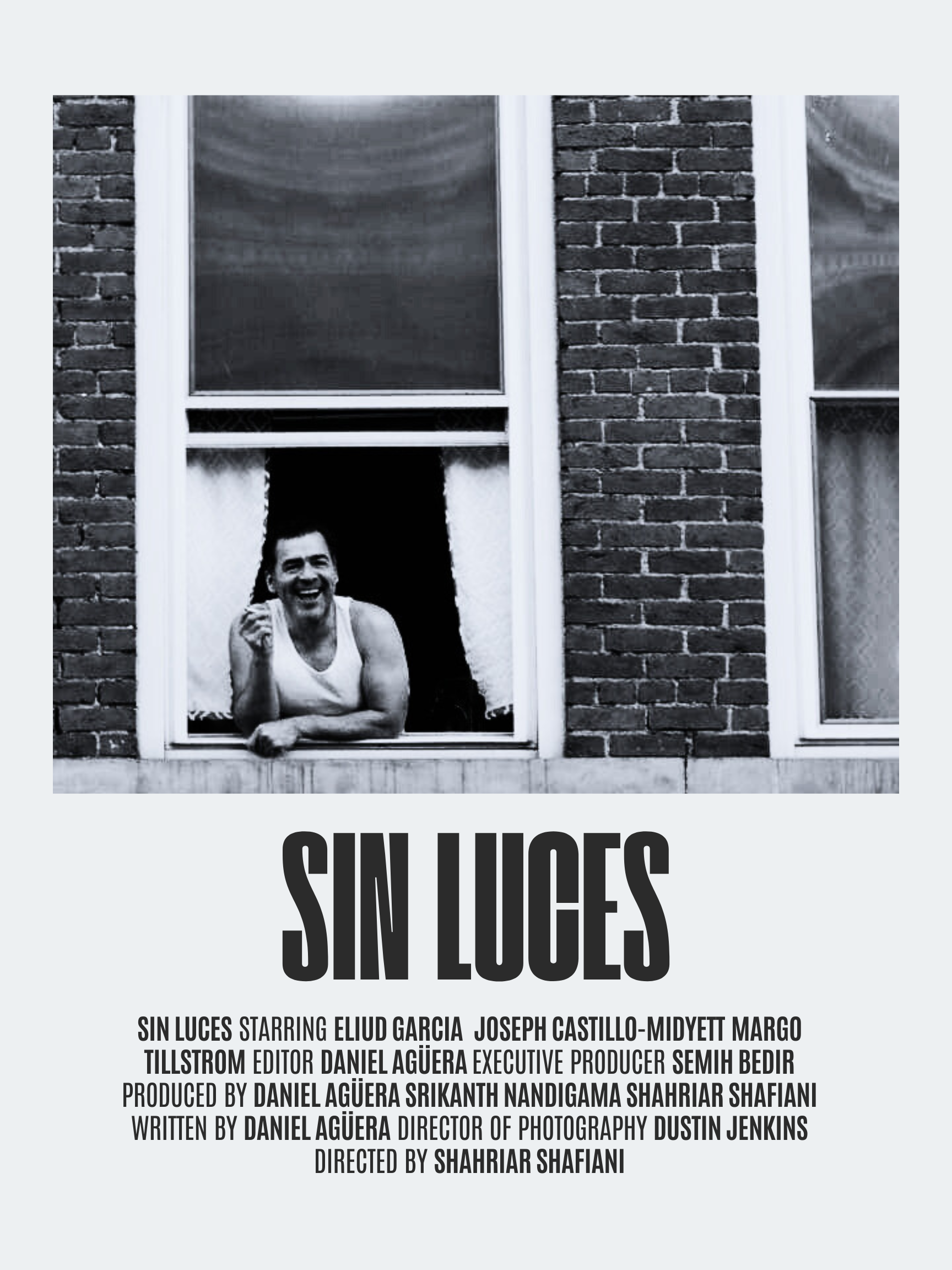
Sin Luces is a narrative short film set in a fictional formerly Latino-dominant neighborhood in Washington, DC, that has been almost entirely gentrified. The film follows Jerry, a bartender struggling with alcoholism, as he confronts his choices and his place in his community on a busy World Cup work day.
Overview
Sin Luces is a narrative short film directed and produced by Shahriar Shafiani. Set in a fictional, rapidly gentrifying urban neighborhood that resonates strongly with Washington, DC, the film follows Jerry, a bartender struggling with alcoholism and displacement, on his last day of work.
Creative Role
Director and Producer
Explain what each role means
Research And Creative Significance
The film explores addiction, gentrification, cultural loss and the emotional consequences of social change. Through performance, mise-en-scène, visual design and narrative restraint, Sin Luces examines how personal crisis is shaped by larger social and economic forces. Its fictional setting allows the story to speak broadly, while its themes are especially relevant to Washington, DC, where questions of neighborhood change, cultural displacement and belonging remain urgent.
Production Model
The film was developed as a multi-institutional creative collaboration among Howard University’s MFA Film Program, the University of Dayton’s Department of Film Studies and Hocking College. Though produced in Athens, Ohio, the film’s social world and thematic concerns are closely connected to the kinds of urban transformations visible in Washington, DC and other cities.
Collaborative Production
The production included Howard MFA filmmakers in key creative and technical roles, including assistant directing, script supervision, sound and grip/electric work. Their participation was not ancillary to the project, but part of the film’s professional collaborative structure. This model reflects the realities of film production, where significant creative work emerges through coordinated contributions across departments under the director’s creative leadership.
Recognition And Screenings
Sin Luces won Best of Competition in the Faculty Narrative category at the BEA Festival of Media Arts and has screened or been presented at Howard University, Athens International Film and Video Festival, Filmfest DC, UFVA and Rhizome DC.
Impact And Public Engagement
Sin Luces contributes to public conversations about addiction, gentrification, cultural displacement and the emotional cost of losing community. By focusing on one bartender’s final day of work, the film approaches large social questions through an intimate character study, inviting audiences to consider how economic change, neighborhood transformation and personal crisis intersect.
The film’s impact has developed through juried recognition, festival screenings, public presentations and audience conversations. Its Best of Competition award from the BEA Festival of Media Arts provides professional recognition from a national media education organization. Screenings and presentations at Howard University, Athens International Film and Video Festival, Filmfest DC, UFVA and Rhizome DC have allowed the film to reach academic, public, professional and community audiences, including Q&A contexts where the film’s themes, production model and social concerns could be discussed directly with viewers.